
Allen Parish Criminal Court Records
Criminal court records in Allen Parish are kept through the Clerk of Court for the 33rd Judicial District Court. The official Criminal Department description says that the office files criminal bills of information, bills of indictment, criminal motions, subpoenas, notices to counsel, and expungements. Minute clerks take notes, type minutes, administer oaths, and file exhibits and evidence offered in court. That makes the court record broader than a charge list.
Louisiana's local court structure also matters. Allen Parish district-court criminal matters are handled through the 33rd Judicial District Court in Oberlin, while custody and booking information sits with the Sheriff's Office. A jail roster can show a booking charge and bond, but the criminal court record is the court case file with filings, hearings, pleas, disposition, and sentencing. For a closer look at the arrest-to-charge path, use the Allen Parish court charge records page.
The manifest includes the clerk's criminal department landing source at the Allen Parish criminal department page.
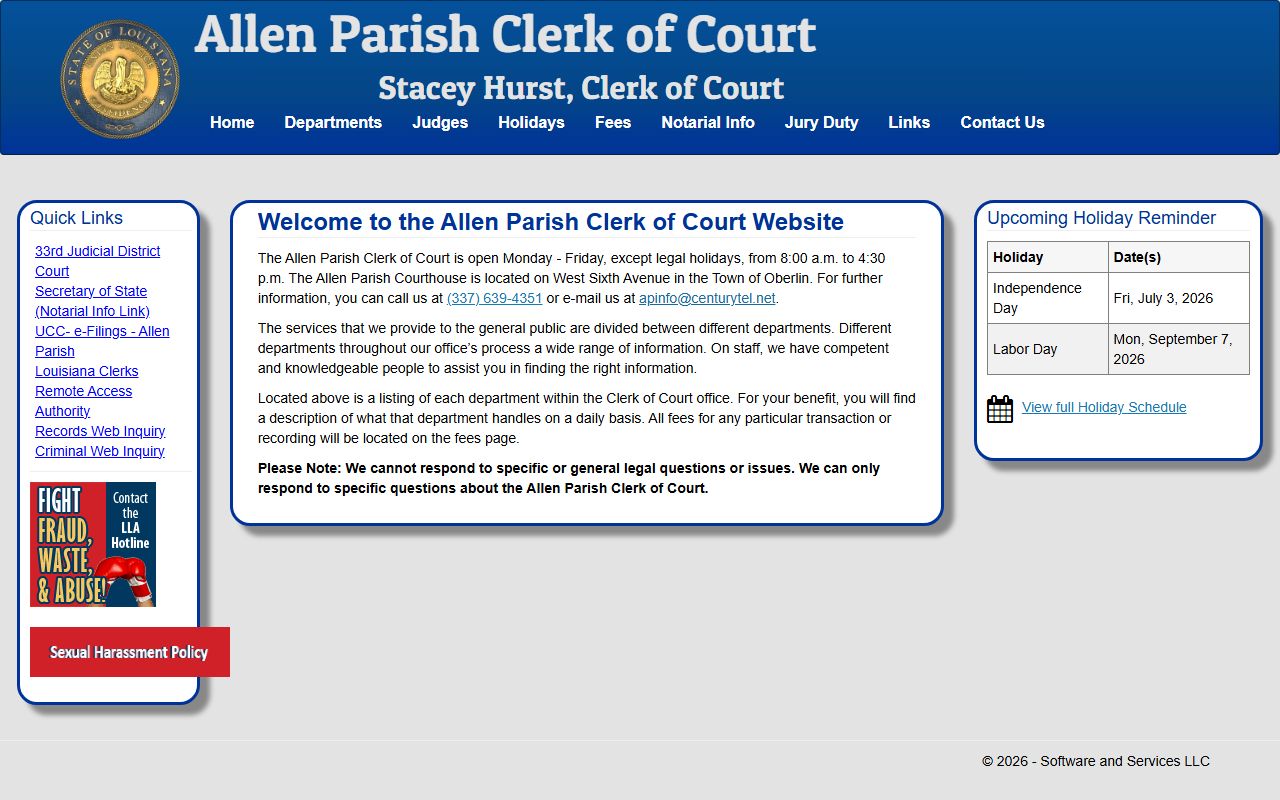
That source anchors this page because it identifies the local filings and clerk work that form the criminal case record.
Search Allen Parish Criminal Court Records
The official online route is ClerkConnect criminal inquiry for Allen Parish. The clerk's Criminal Department page says electronic access is available to search, view, and print records by subscription. The price located in the research is $25 per day, $125 per month, or $1,300 per year, with printing extra. Printed pages are not certified as part of the record.
- Open the clerk-linked criminal inquiry portal and sign in or subscribe if online access is needed.
- Search with the case number or defendant name if known. The public shell did not expose exact field labels.
- Review the case events for charging document, motions, hearing activity, minute entries, plea, disposition, or sentence.
- For a legal copy, contact the Clerk of Court and request the certified criminal disposition or other certified record.
- If the issue is current custody, bond, or jail booking, confirm with the Sheriff's Office because that is not the same file.
Direct clerk access remains important. The Clerk of Court can be contacted by phone, fax, email, mail, or in person. Use P.O. Box 248 for U.S. Mail because the clerk's contact page says mail will not be delivered to the physical address. Use the physical address for in-person visits or carrier delivery.
Requesters should ask for the exact record needed. A certified disposition, a sentencing record, a bill of information, a minute entry, and an expungement filing are different parts of the criminal court file.
The official criminal component source appears at the Allen Parish criminal department component.
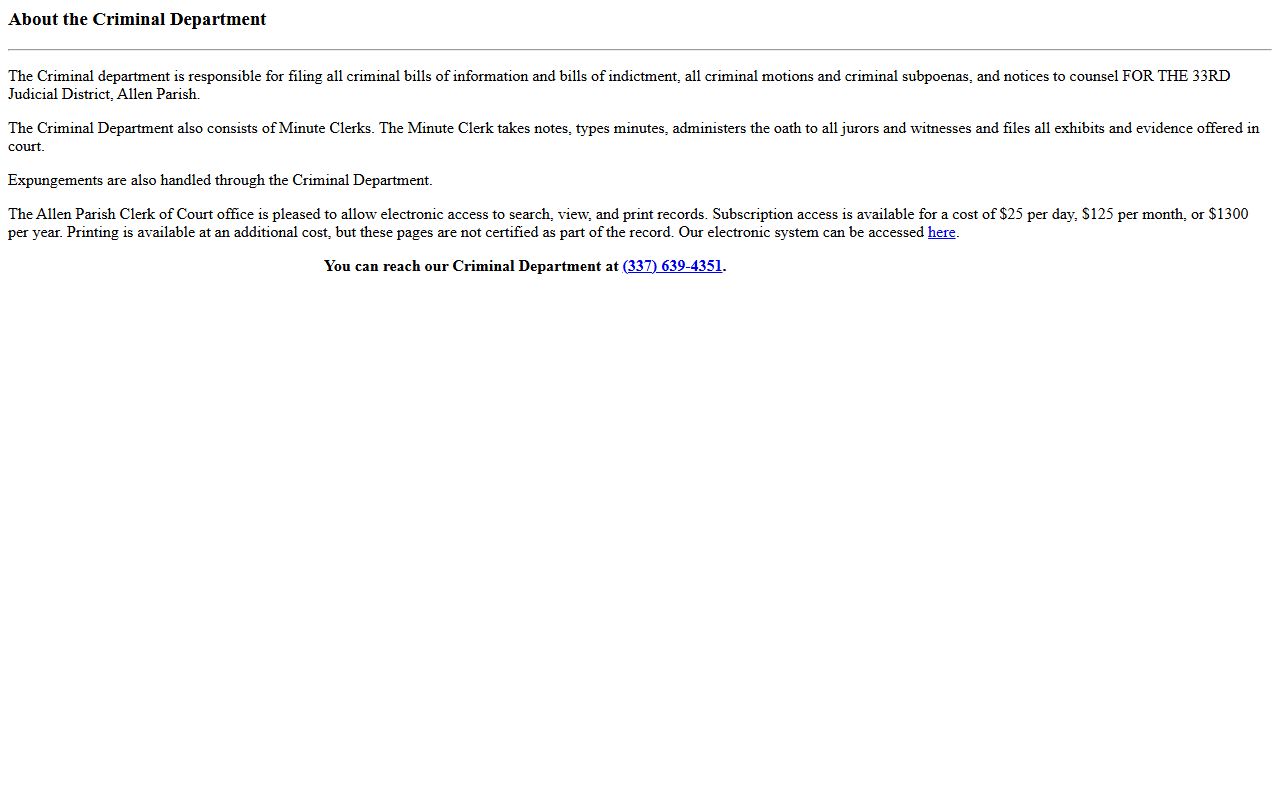
That source supports the subscription prices, printing warning, and the list of criminal filings handled by the clerk.
Allen Parish Criminal Case Flow
A criminal case file builds in stages. The local research confirms that prosecutors use bills of information and indictments as charging documents filed through the Criminal Department. Later records may include subpoenas, motions, notices to counsel, minutes, exhibits, plea entries, disposition entries, sentence records, and expungement filings. Not every case has a trial. Some resolve by plea, dismissal, amendment, or other disposition.
Case flow: Charges Filed › Arraignment › Pretrial and Motions › Plea or Trial › Disposition › Sentencing
| Stage | What Happens |
|---|---|
| Charges filed | A bill of information or indictment is filed with the Criminal Department and opens the court charge record. |
| Arraignment | The defendant responds to the charge. The plea and court setting may appear in minutes or docket activity. |
| Pretrial and motions | Criminal motions, subpoenas, notices to counsel, hearings, exhibits, and minute entries can build the file. |
| Plea or trial | The case may resolve by plea, trial verdict, dismissal, amended charge, or other court action. |
| Disposition and sentencing | The record should show the outcome and any sentence ordered when a conviction or plea results. |
What Allen Parish Criminal Records Show
The public ClerkConnect shell did not reveal a sample criminal case screen during research, so the field table uses the clerk's criminal department description and the general record inventory in the research file. The table avoids unsupported claims about exact portal labels. A certified copy request should ask the clerk to confirm which items are public and which are sealed, redacted, or unavailable.
| Field | What It Shows |
|---|---|
| Case number | The court file identifier if known; the public shell did not expose Allen Parish's format. |
| Defendant | The person charged in the 33rd Judicial District Court case. |
| Charging document | A bill of information or indictment filed in the criminal case. |
| Motions and notices | Criminal motions, notices to counsel, subpoenas, and related pretrial filings. |
| Minute entries | Official notes of court activity, oaths, evidence offered, and events typed by minute clerks. |
| Plea or verdict | The defendant's plea or trial result if the case reaches that stage. |
| Disposition | The current or final result, such as dismissed, amended, convicted, acquitted, or otherwise resolved. |
| Sentence | The penalty ordered after conviction or plea, when sentencing is part of the file. |
| Expungement activity | Filings or orders that limit public access if expungement is granted under Louisiana law. |
Allen Parish Charges vs Convictions
A charge is an accusation filed into the court process. A conviction is an outcome after a guilty plea or verdict. Allen Parish criminal court records may show charges that were dismissed, amended, reduced, or resolved without conviction. The Sheriff's roster sample also warns that charges and bail amounts can change after court appearances, so booking data should not be treated as a final court outcome.
| Point | Charge | Conviction |
|---|---|---|
| Meaning | An allegation filed or presented by prosecution. | A final guilty plea or verdict entered by the court. |
| Where it appears | Bill of information, indictment, docket, minutes, or booking context. | Disposition, judgment, sentence, or certified criminal disposition. |
| Can change | Yes. Charges may be amended, reduced, added, dropped, or dismissed. | Only by later court action, appeal, post-conviction order, or other authorized relief. |
| Proof use | Not proof that a person was found guilty. | May prove guilt when certified and matched to the correct person and case. |
Allen Parish Sealed Criminal Records
Louisiana expungement law is important for Allen Parish criminal court records. Code of Criminal Procedure article 971 defines expungement terms, and article 972 addresses when a person may be entitled to expungement, subject to statutory limits. The Criminal Department handles expungements locally, but the exact Allen Parish expungement filing fee was not located in the official sources reviewed.
| Point | Sealed | Expunged |
|---|---|---|
| Public visibility | Removed from ordinary public view by court restriction. | Limited from public access through the Louisiana expungement process when granted. |
| Who may still access | Access depends on the sealing order and applicable law. | Law-enforcement or criminal-justice agencies may retain authorized access. |
| Local route | Confirm with the Clerk of Court if a file is sealed. | Start with the Criminal Department because the clerk handles expungements. |
| Research gap | Allen-specific sealing procedure details were not located. | Exact Allen Parish filing fee was not located in official sources reviewed. |
The manifest includes the expungement definition source at Louisiana Code of Criminal Procedure article 971.
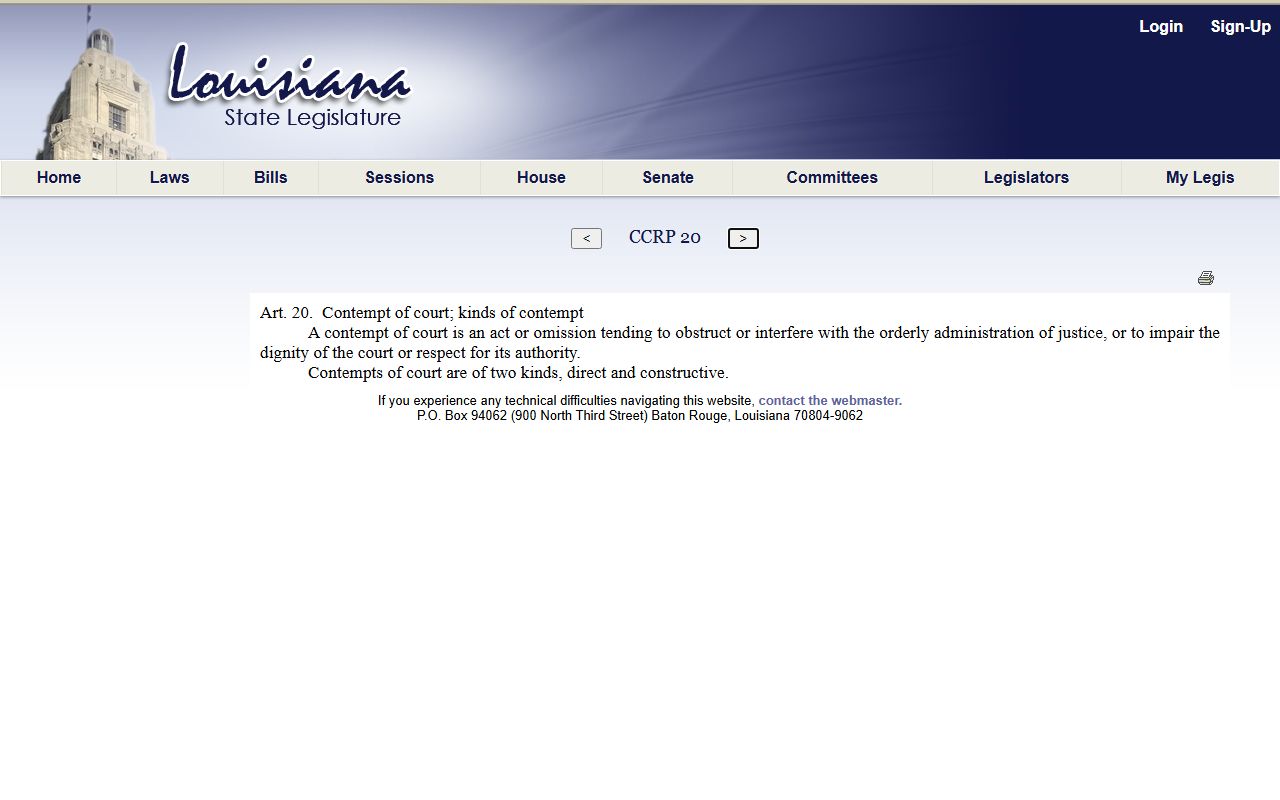
That statute defines terms used in the expungement process, while the local clerk remains the filing contact for Allen Parish criminal cases.
The companion manifest source is Louisiana Code of Criminal Procedure article 972.
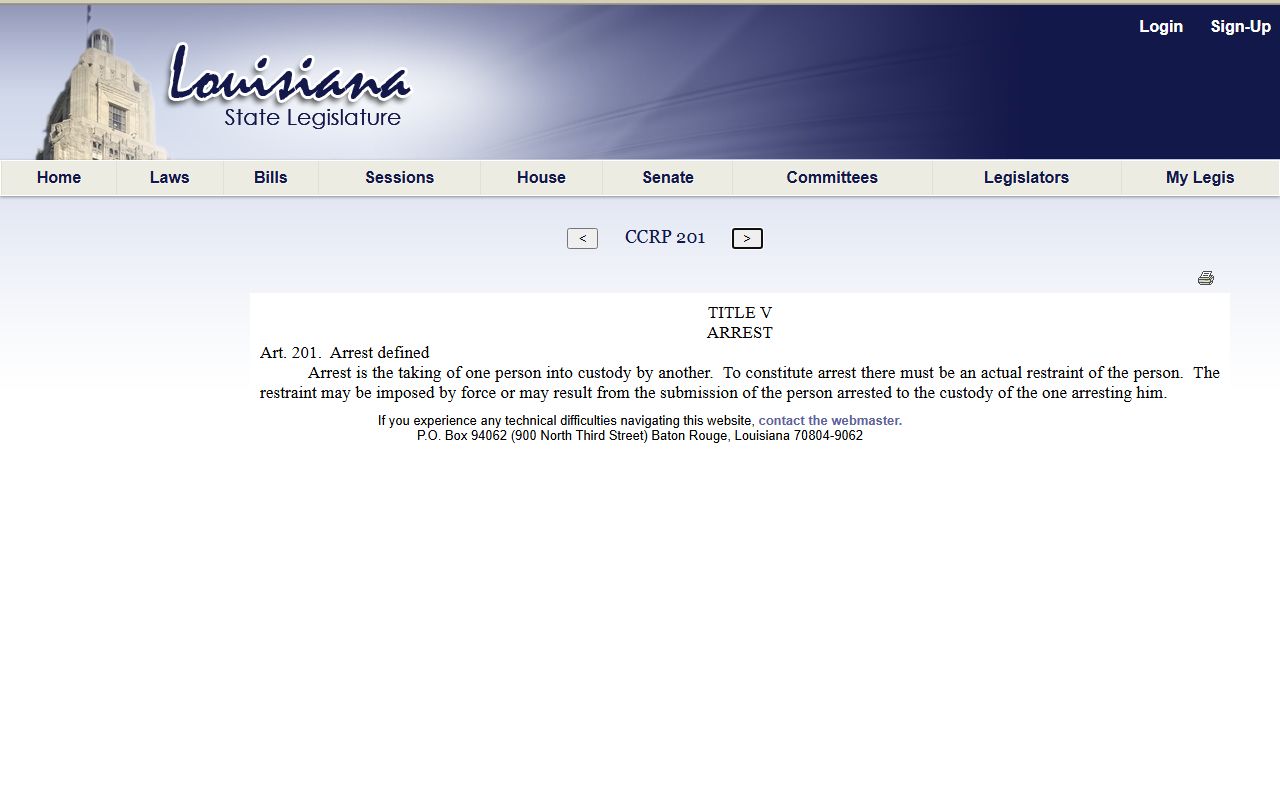
That article supports the point that expungement eligibility depends on Louisiana statutory limits, not just a local request.
Public Access to Allen Parish Criminal Records
Public access starts with Louisiana public-records law and then narrows through criminal, juvenile, expungement, and court restrictions. La. R.S. 44:1 defines public records and public bodies. La. R.S. 44:31 recognizes the public's right to inspect or obtain public records unless an exception applies. Criminal court files may be public in part, but not every related record is open.
Juvenile records are the clearest limit. The clerk states that juvenile delinquent and Child in Need of Care filings are confidential and require a valid court order to view. Louisiana Children's Code article 412 supports juvenile confidentiality. Adoption records are also confidential and sealed in the clerk's records.
Note: A public criminal case file may still omit sealed, juvenile, adoption, expunged, or redacted information.
The manifest includes the public-records definition source at La. R.S. 44:1.
That statute frames the general public-records rule before criminal-specific restrictions are applied.
Restricted Allen Parish Criminal Records
Restricted criminal records include juvenile cases, sealed matters, expunged records, and records with redacted personal identifiers. The clerk's juvenile and adoption information uses the phrase valid court order for access to those confidential proceedings. Mental-health commitment record access was not located in the Allen Parish official sources reviewed, so no local access procedure is stated here.
For federal criminal cases, Allen Parish local court records are not the source. Federal trial matters route to the U.S. District Court for the Western District of Louisiana, with docket access through PACER or CM/ECF. Federal prosecution is handled by the U.S. Attorney's Office for the Western District of Louisiana, not the Allen Parish Clerk of Court.
The juvenile confidentiality source in the manifest is Louisiana Children's Code article 412.
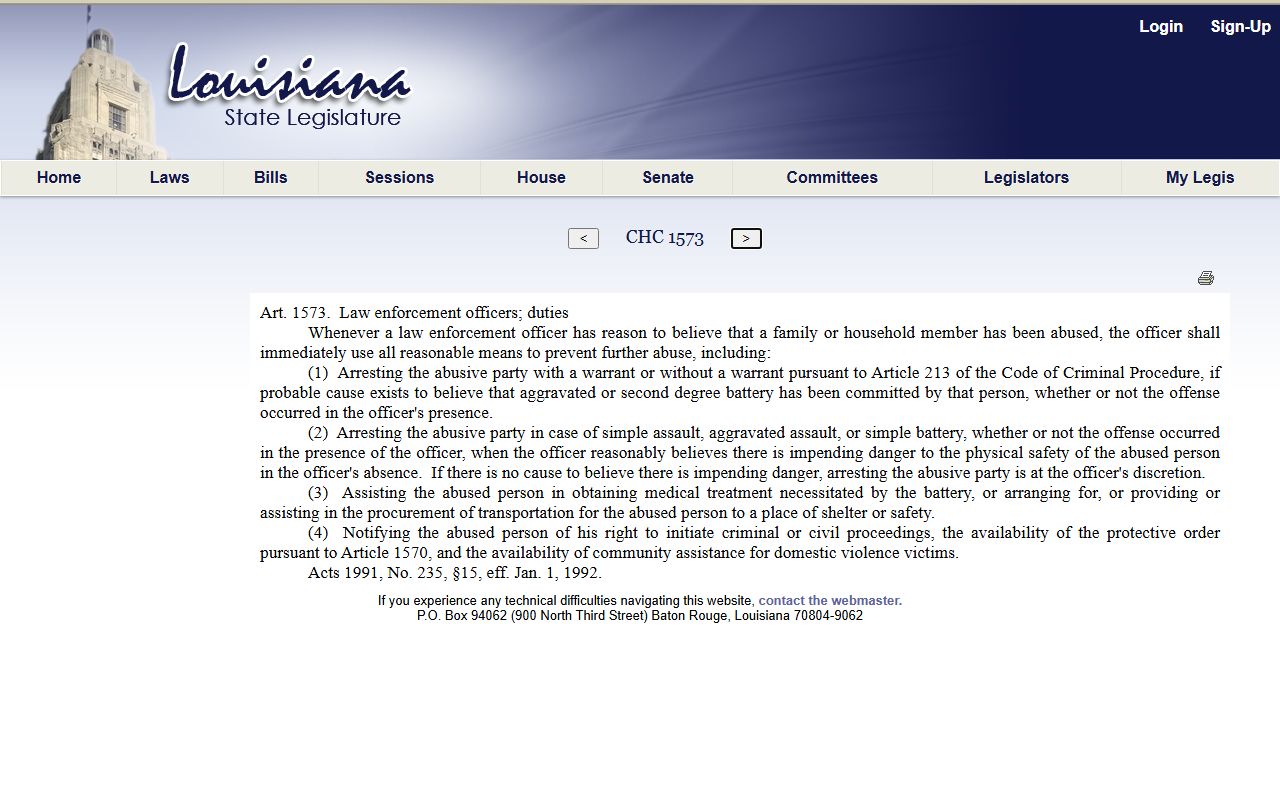
That source is why juvenile criminal-style records should not be described as ordinary searchable public criminal court records.